Financial Intelligence Authority (FIA) and other regulatory agencies have come under scrutiny over their failure to raise red flags on payments in the controversial Amaryllis Hotel transaction.
The scrutiny comes against a background of Reserve Bank of Malawi (RBM) and FIA scrambling to trace and protect up to K90 billion in part payments for the hotel almost two months after the Public Service Pension Trust Fund made the payment and four months after RBM learnt that the transaction it was trying to stop had its sale agreement signed by parties.
Ministry of Finance, Economic Planning and Development is also in the picture as six of its officials sit on the fund’s board of trustees.
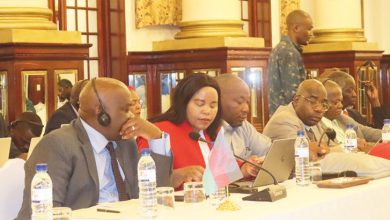
During the Public Accounts Committee (PAC) of Parliament inquiry on the deal on Wednesday, Blantyre City Chilomoni-Manyowe-Nancholi legislator Noel Lipipa (Democratic Progressive Party) wondered how RBM allowed the money to be paid through its system.
But in response, RBM Governor George Partridge said the money did not go through the central bank’s system.

| Nation
He said: “No funds came from the Reserve Bank. It was actually the fund managers who were keeping these funds that were instructed to pay Yusuf Investments [owners of the hotel]. So these funds are all mutual.
“I think the important thing is that this did not come from the Reserve Bank.”
After Lipipa insisted that documents he had reviewed showed the money moved from RBM to Amaryllis Hotel owner Yusuf Investments, RBM director of pension and insurance supervision Kaluso Chihana said main accounts for commercial banks are ordinarily stationed at the central bank.
He said: “But there are so many transactions, instructions that the banks would issue to the Reserve Bank, and would not know exactly what those payments are for. They would simply say, move funds from our investment account to that particular, our main account, it should go to that particular account.
“So, I suspect that the issue that was brought, that these funds were actually from the Reserve Bank, could have happened in that manner. And I think that’s what I can say for now.”
Commenting on the developments, private practice lawyer Benedicto Kondowe said the pattern points to systemic regulatory failure, not isolated oversight, stressing, there was clear breakdown in coordination, real-time intelligence sharing, and fiduciary vigilance.
He said the Ministry of Finance, Economic Planning and Decentralisation, as a trustee, cannot claim distance while the registrar of financial institutions’ “lack of clarity” reflects weak transaction scrutiny and the FIA’s delayed action undermines its core mandate.
“A coordinated, risk-based pre-transaction review should have been triggered. The FIA ought to have flagged and escalated suspicious flows in real time; the RFI [Registrar of Financial Institutions] should have enforced enhanced due diligence on the bank and beneficiary; and the ministry, through its trustees, should have demanded full disclosure, valuation justification, and compliance clearance before approval,” he said.
Kondowe also said accountability should attach to both institutions and individuals, especially trustees, while inter-agency coordination needs to be formalised and enforceable.
National Anti-Corruption Alliance chairperson Michael Kaiyatsa said the situation presents a complete breakdown of responsibility, and must be treated as such, stressing there is a serious failure of duty by all three institutions.
He said: “The Ministry of Finance cannot claim ignorance. If half of the trustees come from the Ministry, then they were either aware or they failed to supervise properly. Both situations are unacceptable. It points to either complicity or negligence.
“The FIA also failed in its core mandate. Its role is to detect and act on suspicious financial activity early, not after the money is already gone. This suggests weak oversight, poor coordination, and possibly a culture of looking away until it is too late.”
Kaiyatsa said Malawians cannot continue to tolerate institutions that only wake up after money is gone, adding, this is not just inefficiency, but a betrayal of public trust.
Earlier testimony before the committee revealed that FDH Bank plc valued the hotel at about K30 billion in 2023 while Continental Assets Management Limited pegged it at K36.7 billion in 2024.
The committee is also scheduled to interview other stakeholders, including Attorney General Frank Mbeta, Secretary to the Treasury, FIA officials and former Secretary to the President and Cabinet Colleen Zamba. Former State House Chief of Staff and the Lazarus Chakwera administration testified last night.